Key Takeaways for brokers, consultants, and admins:
- Employers are prioritizing cost predictability and employee choice
- Brokers are becoming more strategic, consultative, and workflow-focused
- Off-Exchange enrollment is driving more personalized healthcare experiences
- The ICHRA ecosystem depends on stronger coordination across platforms and partners
A few years ago, ICHRA conversations mostly sounded like people trying to explain cryptocurrency to HR departments.
Lots of “future of benefits” talk.
Lots of skepticism.
Lots of compliance questions.
Very little operational reality.
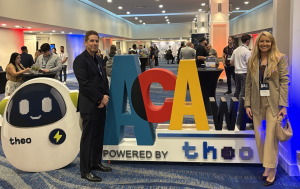
At this year’s AIM 2026 Conference (Aligning ICHRA Minds) hosted by Remodel Health and Ambetter Health, the conversation was much more grounded. Employers are actively trying to solve renewal pressure. Brokers are rebuilding workflows around individualized enrollment. Carriers are investing more heavily in Off-Exchange products. And administrators are discovering very quickly that scaling ICHRA operations is significantly harder than putting “consumer choice” on a PowerPoint slide.
Because once an industry stops arguing about whether something exists and starts arguing about employee experience, contribution strategies, and enrollment friction… it usually means the market is becoming real.
Employers Are Tired of Playing the Renewal Roulette Game
One of the clearest themes throughout the conference was employer fatigue. Not “we’re curious about ICHRA” fatigue.
Exhaustion from unpredictable renewals, rising claims exposure, fragmented benefits after acquisitions, and trying to explain another double-digit increase to leadership teams.
During the Beyond the Pitch: Positioning ICHRA for C-Suite Buy-In employer panel, Bahar Khidir from Angels of Care Pediatric Home Health and Lindsay Fisher from Higginbotham talked openly about the reality many employers are facing. Traditional group renewals had become increasingly difficult to sustain operationally and financially.

And brokers were not exactly pretending things are getting easier.
Several consultants talked about groups potentially staring down massive renewal increases again this year, especially employers with large claims exposure. One broker basically summarized the mood as: yes, the “claims hamster wheel” is still very much alive and well.
That phrase came up multiple times during AIM, and honestly, it stuck because it perfectly describes how a lot of employers feel right now. Run harder. Pay more. Repeat next year.
ICHRA is appealing because it changes the structure of the conversation.
Instead of reacting to renewals every year, employers can proactively define contribution strategies, create more budget predictability, and stop tying the entire benefits strategy to one catastrophic claims year.
That does not mean ICHRA is easy. It just means employers are finding the current model is not working anymore.
The Most Interesting Part of ICHRA Is Not the Finance
The finance story gets most of the attention because cost predictability is usually what gets employers into the conversation initially.
But the most interesting discussions were around employee behavior.
One employer shared feedback from employees that honestly explains the momentum around ICHRA better than any market growth chart.
“This is the first time I have found coverage for my family’s needs that actually meets all of our needs.”
Employees are no longer inheriting whatever two plans HR selected six months ago.
And according to multiple employers at AIM, employees are becoming much more engaged in healthcare because of it. Turns out when people choose coverage for themselves, they tend to care more about how it works.
Michael Levin from HealthSherpa touched on this during ICHRA Market Insights: What the Data is Telling Us, where he discussed how consumerization is becoming a defining part of the ICHRA market. Employees are actively making budget-conscious decisions instead of defaulting into static plan structures. That shift is showing up in enrollment trends too.
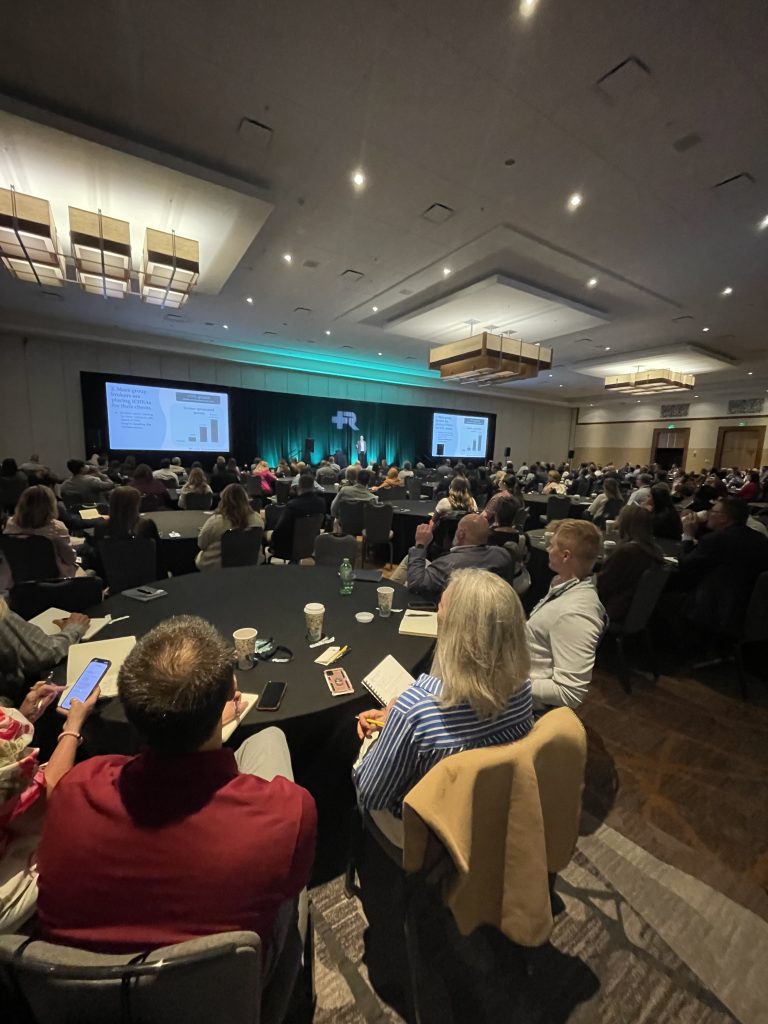
According to the session, many employees moved down a metal tier this year because of rising premiums, choosing plans based on how coverage fits their financial priorities. PPO enrollment also did not explode the way many expected, even when more PPO plans became available Off-Exchange.
Employees are shopping differently than employers assumed they would.
Off-Exchange Is Quietly Becoming the Center of Gravity
Michael Levin’s session pointed out that 82% of ICHRA enrollments are happening Off-Exchange. Part of that is driven by Section 125 contribution rules. But another big reason is flexibility.
Off-Exchange gives carriers and enrollment platforms more flexibility to experiment, refine products, and respond faster to market demand. Brokers can support more personalized shopping experiences, carriers can build more targeted plan designs, and platforms are able to iterate without waiting through slower CMS-controlled update cycles. And employers are starting to notice the difference.
Several employer conversations focused on situations where Off-Exchange options offered stronger pricing or better plan fit for employees with unique healthcare needs.
One discussion centered around families with special needs children or highly specialized medication requirements. Traditional individual market plans do not always mirror the breadth of large group coverage in those scenarios, which is creating pressure for carriers to innovate more aggressively in Off-Exchange product design.
The future of ICHRA probably is not just “take ACA plans and move them into a reimbursement model.” It is going to push carriers, enrollment platforms, brokers, and administrators toward more personalized product strategies entirely.
Brokers Are Becoming Much More Operational
Brokers are doing a lot more than “selling benefits” now. They are becoming workflow coordinators, educators, enrollment strategists, payroll translators, communication managers, and unofficial therapists during Open Enrollment (OE) season.
Nobody positioned ICHRA as a magic solution. And some of the best sessions were the ones discussing where friction still exists:
- HR teams losing some manual flexibility around enrollment timing
- Payroll deduction coordination
- Qualifying Life Event (QLE) complexity
- OE overlap issues
- Data integrity problems
- HRIS integration headaches
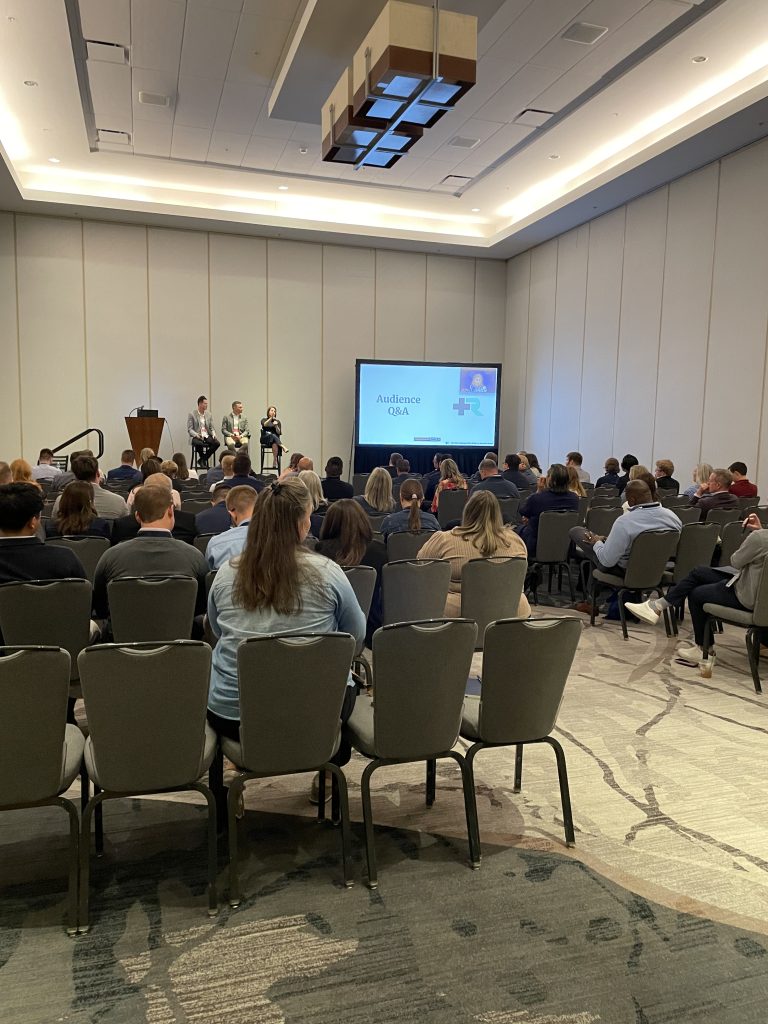
The Beyond the Pitch: Positioning ICHRA for C-Suite Buy-In session was especially good here because the panelists did not pretend implementation was flawless. They talked openly about the operational landmines.
At one point, Troy Hochstetler from Remodel Health described the role of a good ICHRA administrator as being a “transparent process advocate” who helps employers understand where friction points are going to happen before they happen.
Honestly? More vendors should talk like that.
ICHRA works best when employers, brokers, administrators, enrollment platforms, and carriers all acknowledge the complexity upfront and build coordinated processes around it.
That is a much more mature conversation than where this market used to be.
The Infrastructure Conversation Is Finally Catching Up
One of the smartest sessions at AIM was Building the Rails of the ICHRA Ecosystem with Dan Langevin from Ideon, Aaron Johnson from Paylocity, Gayathri Somanath from Finch, and Bill Williams from Remodel Health.
Because underneath all the market growth conversations is an obvious reality. The infrastructure still has to catch up. Enrollment systems, payroll systems, quoting workflows, HRIS integrations, communications, carrier connectivity, reimbursement operations… all of it has to work together.
And historically, healthcare benefits have not exactly been famous for seamless interoperability. The good news is the ecosystem is clearly becoming more connected.
ICHRA growth is creating new opportunities, but it is also creating new operational challenges for brokers, administrators, and enrollment teams trying to scale personalized healthcare experiences.
At W3LL, we’re helping organizations simplify that complexity through more connected enrollment, quoting, and workflow tools built for the evolving ICHRA ecosystem. Visit the W3LL website for more ICHRA insights, enrollment resources, and operational strategies shaping the future of healthcare coverage.
You can also connect with me on LinkedIn for ongoing conversations around ICHRA broker strategy, Off-Exchange enrollment, and the future of personalized healthcare enrollment.