Key takeaway for brokers & agencies:
- AI should amplify brokers, not replace them. The biggest opportunities lie in automating repetitive tasks while preserving trusted advisor relationships.
- Agencies that combine AI with human oversight will be better positioned to improve client service, increase capacity, and scale sustainably.
- Successful AI adoption requires the right technology, governance, and workflows, not just access to the latest tools.
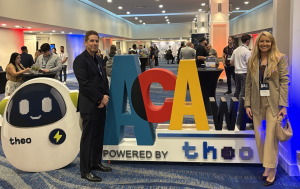
As a first-time NABIP attendee, one thing surprised me more than anything else. I expected to hear skepticism around AI. Instead, I found an industry eager to explore how it can fit into everyday agency operations.
The conversations centered around finding practical ways to save time, reduce administrative work, and create more capacity to serve clients.
That message came through clearly in two artificial intelligence (AI)-focused breakout sessions. Alan Katz of NextAgency encouraged agencies to approach AI with healthy skepticism, while Will Johnson of Gyde shared examples of how AI is already helping brokers improve service and scale their businesses. Their presentations took different approaches, but they landed on the same conclusion: AI is another tool that helps great brokers do what they already do best.
Before diving into the sessions, congratulations to HRASimple on being named NABIP’s Trailblazer of the Year. It was an honor for W3LL to be recognized alongside such an innovative organization. As Individual Coverage Health Reimbursement Arrangements (ICHRA) continues to gain momentum, it’s encouraging to see companies across the industry working toward the same goal of expanding coverage options and making it easier for employers, brokers, and individuals to embrace the future of health benefits.

AI Doesn’t Need to Be Perfect to Be Useful
One of the first breakout sessions I attended was Alan Katz’s “AI Reality Check.” Instead of selling AI as the answer to every agency challenge, he spent the session explaining where it works well, where it falls short, and why brokers need to understand the difference.
The story that stuck with me wasn’t about a new AI feature. It was about a project that never made it to production. After weeks of planning a new, Alan’s team finally asked the AI one simple question: “Can you reliably do what we’re planning to have you do?” Its answer surprised them. “No.”
That experience changed the direction of the project and eventually led to an entire series on AI’s strengths and limitations. One line from the session summed it up perfectly: “AI is a valuable but problem-prone liar.”
That doesn’t mean brokers should avoid AI. It means they should be intentional about how they use it. Draft the email. Summarize the meeting. Organize the notes. Surface the information. Then let the broker make the recommendation.
For me, that was one of the biggest takeaways from NABIP. The agencies getting the most value from AI aren’t asking it to replace their expertise. They’re using it to spend less time on repetitive work and more time doing what clients need from a trusted benefits advisor.
Helping Brokers Spend More Time Being Brokers
If Alan Katz’s session was about setting realistic expectations for AI, Will Johnson’s presentation focused on where AI can make an immediate impact inside an agency.
AI should handle the repetitive work so brokers can spend more time doing the work that requires a real person. “The winning formula is not AI. It is humans plus AI.”
That idea came up again and again as he walked through examples. Think appointment scheduling, client summaries, renewal preparation, answering routine questions, and organizing information before a broker ever picks up the phone.
Those aren’t the conversations that build trust. They’re the administrative tasks that often get in the way of them. One comment from Will really stuck with me, “Do you like getting yelled at?”
It got a laugh from the audience, but it made an important point. Nobody enjoys spending hours tracking down routine answers or playing phone tag when clients just want help. If AI can remove some of that friction, brokers have more time to focus on education, problem solving, and building relationships.
That’s where I think AI has the most potential. Not as a replacement for the broker, but as a way to give brokers more capacity to deliver the kind of service that keeps clients coming back.

Adopting AI Starts with Your Team
One point from Will’s presentation doesn’t get discussed nearly enough. Agencies have no shortage of AI tools. Helping employees adopt them thoughtfully is where the real work begins.
Many agency employees have owned the same workflows for years. Introducing AI can naturally create uncertainty, especially if employees assume automation means replacement. Will encouraged agencies to approach that transition with transparency, clear communication, and realistic expectations.
“Times are changing. That’s okay. But with times changing, roles might be changing.”
I appreciated that perspective because it acknowledged something every agency will face. Technology can automate repetitive work, but successful adoption depends on whether people understand why those changes are happening.
The agencies that benefit most from AI won’t necessarily be the first to adopt every new tool. They’ll be the ones that help their teams embrace new workflows while staying focused on what clients value: knowledgeable guidance, trusted relationships, and personalized service.
That’s the philosophy behind W3LL’s Broker Agency Cloud (BAC). BAC gives brokers one place to manage clients, opportunities, enrollments, and renewals, reducing administrative work so they can spend more time advising clients and growing their book of business.
Sign up for BAC for free and start managing your book of business smarter.