Key Takeaways for brokers, consultants, and admins:
- ICHRA conversations are shifting from compliance to operational strategy
- Employers are prioritizing cost predictability and employee choice
- Brokers are becoming more consultative and ecosystem-focused
- Off-Exchange enrollment and personalized plan selection are gaining momentum
The ICHRA conversation has officially moved past “What is this?” and into “How do we operationalize it?”
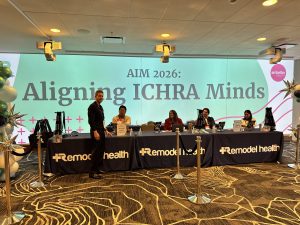
At the ICHRA Conference hosted by Zizzl and Ambetter, the drive for action was center stage. A few years ago, most discussions focused on reimbursement mechanics, compliance questions, or whether ICHRA would even gain traction.
Now the conversation is much more practical. Employers are actively evaluating strategies. Brokers are building new workflows around it. Carriers are investing more heavily in Off-Exchange products. And employees are starting to expect healthcare coverage that feels more personalized to their actual lives.
What stood out most at the conference was not just the growth of ICHRA, but how much the surrounding healthcare ecosystem is evolving with it.
Employers Are Looking for More Predictable Healthcare Costs
One of the strongest themes throughout the conference was cost predictability.
Employers are exhausted by volatile renewals, rising claims exposure, and increasingly difficult budgeting conversations. Several brokers and consultants talked about how difficult the last renewal cycle was, especially for groups with large claims exposure.
ICHRA is creating a different way to approach benefits planning. Instead of absorbing unpredictable year-over-year increases, employers can establish a defined contribution strategy while still supporting employee healthcare coverage.
But what stood out most from the employer discussions was how much education and modeling still matter in the decision-making process.
Multiple employers emphasized how valuable it was to work with consultants and brokers who could model different contribution approaches and benchmark multiple scenarios before deciding.
That visibility gave employers confidence that they were making informed decisions instead of reacting to renewal pressure.
One employer shared that they benchmarked their contribution strategy around 88% of a Gold plan in their market. Because employees had the flexibility to choose plans that fit their needs, many selected silver or bronze plans and ended up paying little to nothing in monthly premiums.

That level of flexibility is difficult to replicate in a traditional one-size-fits-all group structure.
Employers were focused on creating healthcare strategies that felt more sustainable long term while giving employees more personalized options.
Employees Want Healthcare Coverage That Actually Fits Their Lives
One of the most important moments from the conference came from an employer who shared feedback directly from employees.
“This is the first time I have found coverage for my family’s needs that actually meets all of our needs.”
Traditional group coverage often works well for the majority of employees, but it can struggle to accommodate unique family situations, provider preferences, prescription needs, or specialized care requirements.
ICHRA changes that dynamic by allowing employees to shop for coverage that aligns with their specific healthcare priorities.
For some employees, that may mean prioritizing premium affordability. For others, it means:
- Maintaining access to specific providers
- Finding better prescription coverage
- Accessing pediatric specialists
- Selecting stronger networks
- Reducing out-of-pocket exposure
- Choosing plans that better fit chronic care needs
That level of consumer choice fundamentally changes the enrollment experience.
One analogy that came up repeatedly during conversations at the conference compares traditional group coverage to being handed a meal someone else selected for you. ICHRA, by comparison, gives employees more flexibility to choose what works for their family.

And allowing people to actively choose their healthcare coverage instead of passively inheriting it, means they become more engaged.
Several employers discussed seeing employees become more involved in:
- Primary care engagement
- Medication adherence
- Follow-up care
- Healthcare literacy
- Understanding provider networks
- Evaluating healthcare costs
Healthcare starts becoming something people actively manage instead of something they only think about during Open Enrollment (OE).
Brokers Are Becoming More Strategic in the ICHRA Market
Another major takeaway from the conference was how much the broker role is evolving. Several consultants encouraged brokers to stop treating ICHRA as a “last resort” conversation.
Instead, they argued that ICHRA should simply be part of the benefits discussion from the beginning, even if it is not ultimately the right fit for a particular employer today.
“Our job is to bring things to the table that we love and things we hate. This is an education tool.”
That perspective matters because employers are increasingly hearing about ICHRA from multiple sources. If a broker avoids the conversation, employers begin questioning whether all options are being presented.
At the same time, brokers were also realistic about the operational complexity involved. Nobody positioned ICHRA as a silver bullet. There was consistent acknowledgment that successful rollout requires:
- Strong partnerships
- Operational readiness
- Enrollment support
- Employee education
- Ongoing service models
ICHRA creates opportunities, but it also introduces new operational realities employers need to understand before making the transition. For example, several brokers discussed how employers lost some of the flexibility they historically had under traditional group coverage.
One panelist shared the example of an employee missing open enrollment because they were hospitalized. Under a traditional group plan, HR may have more flexibility to manually resolve the situation. In an ICHRA structure tied to individual market enrollment rules, those exceptions become much harder to manage.
That does not make ICHRA bad. But it does reinforce why education, process management, and operational coordination matter.
The ICHRA Ecosystem Is Becoming More Connected
One thing that keeps surprising people is how interconnected the ICHRA ecosystem has become. Enrollment is no longer just a transaction between an employer and a carrier.
Now the experience often involves:
- Brokers
- Administrators
- Enrollment platforms
- Carriers
- Support teams
- Communication tools
All participating in different parts of the employee experience. That creates new opportunities for innovation, but it also creates coordination challenges.

Communication authority, Agent of Record relationships, compensation structures, enrollment ownership, and ongoing member engagement are all evolving quickly as the market matures.
Today, brokers, enrollment organizations, and technology platforms are taking on much larger roles in education, guidance, enrollment support, and ongoing engagement.
I see this shift as one of the biggest long-term changes happening in healthcare enrollment. The future is becoming much more collaborative, ecosystem-driven, and consumer-focused.
Off-Exchange Enrollment Is Becoming a Bigger Part of the Conversation
Another interesting takeaway from the conference was how often Off-Exchange enrollment came up in employer and broker conversations. Several participants noted that employees are finding stronger pricing opportunities Off-Exchange for the same plans or similar coverage structures.
That is creating increased attention around:
- Off-Exchange enrollment workflows
- Quoting tools
- Plan comparison experiences
- Enrollment support
- Personalized shopping experiences
At the same time, employers encouraged carriers to continue innovating in Off-Exchange product design. One discussion focused specifically on families with specialized healthcare needs that may not fit neatly into traditional individual market plan structures. Examples included:
- Specialized medications
- Pediatric care
- Chronic condition management
- Unique network requirements
Large group coverage has historically been better equipped to accommodate some of these edge-case scenarios.
As ICHRA enrollment grows, employers are increasingly looking for carriers and partners willing to think more creatively about how individual market products can evolve to support more diverse healthcare needs.
The Future of Healthcare Coverage Will Be More Personalized
One of the clearest messages from the conference was that the future probably is not “group versus ICHRA.” It is both.
The market is moving toward a more flexible environment where employers, employees, brokers, carriers, and technology platforms all play a larger role in shaping healthcare experiences. That future is likely to be more:
- Personalized
- Consumer-directed
- Technology-enabled
- Data-informed
- Operational coordination behind the scenes
At W3LL, we believe the organizations that succeed in this next phase of healthcare enrollment will be the ones that simplify complexity for both employers and employees while building workflows that scale operationally. Because at the end of the day, employees are looking for healthcare coverage that works for their lives.
Connect with me on LinkedIn to keep the conversation going.